


Video 1
04/12/2025
The Asia–Pacific region is the world’s largest emitter of greenhouse gases, yet it is also becoming one of the biggest contributors to global investment in green innovation and low-carbon technologies.
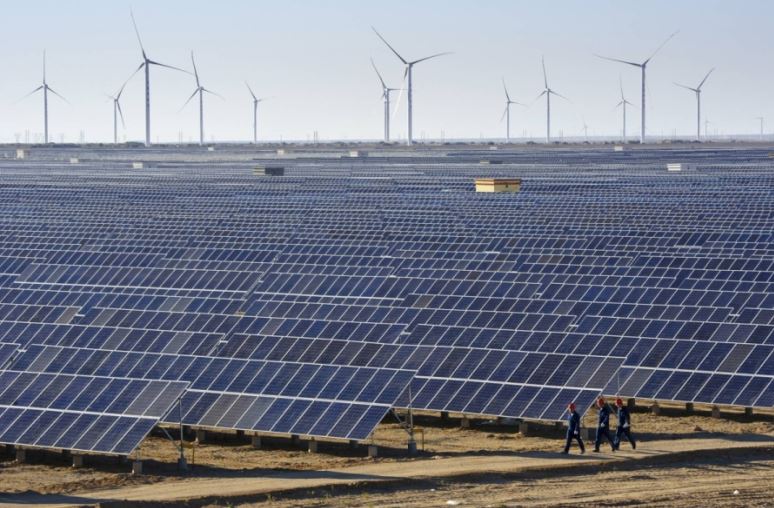
While initiatives and efforts to achieve Net-Zero carbon emissions are facing growing political backlash in the United States and Europe, climate-related investment is becoming a central focus in the Asia–Pacific region.
This observation was highlighted in an article by Henry Fernandez, Chairman and CEO of Morgan Stanley Capital International (MSCI), published in The Business Times on September 9. MSCI is one of the world’s leading providers of equity, fixed-income, and real-estate indexes.
According to the article, as U.S. crude oil production rises to record levels and political resistance to Net-Zero policies grows in the U.S. and Europe, concerns are mounting that global climate-action efforts could stall. What is urgently needed now is for governments to create policies that incentivize decarbonization. In the private sector, however, many companies are not waiting for regulators—they are already taking action.
A report by the Asia Investor Group on Climate Change (AIGCC) shows that 70% of Asian investors—many of them asset managers—believe climate change poses both major risks and major opportunities. Meanwhile, 57% of Asian investors say they factor climate risks into their investment decisions.
The Asia–Pacific region accounts for the largest share of global greenhouse-gas emissions and an even larger share of global coal-fired power generation. Yet it is also one of the biggest contributors to investment in green innovation and low-carbon technologies.
Henry Fernandez of MSCI notes that the region holds significant potential to advance the development of carbon capture, utilization and storage (CCUS) technologies in the coming decades. McKinsey predicts that the Asia–Pacific region could capture 55% of the global CCUS market by the mid-21st century.
MSCI researchers report that the number of carbon credits issued in the Asia–Pacific region has risen rapidly since 2014, led by India, China, Australia, and Indonesia. In capital markets, Singapore and Hong Kong are racing to become the region’s leading climate-investment hubs.
However, Asian nations will still need to accelerate their decarbonization efforts to meet Net-Zero goals. According to the Asian Policy Society, the Asia–Pacific region must invest over USD 70 trillion to achieve Net-Zero emissions by 2050.
Chanh Tai
(According to The Business Times and zerocarbon-analytics.org)