

Video 1
04/12/2025
The year 2025 marks a significant milestone for Viet Nam’s carbon market. With strong coordination between the Government, businesses, and the international community, Viet Nam is not only asserting its position in the global green economy but also advancing closer to its goal of achieving net-zero emissions by 2050. This is not only an environmental commitment but also an opportunity to build a prosperous, sustainable, and nature-aligned economy.
NetZero.VN – February 6, 2025
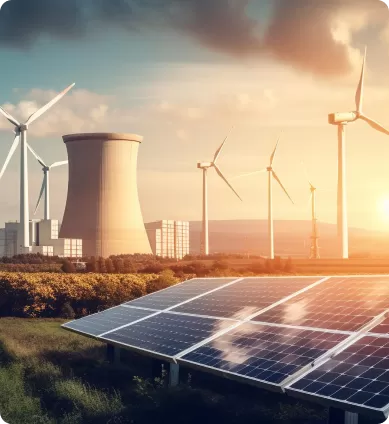
The green transition is no longer a slogan—it has become an unavoidable global requirement to ensure the survival and sustainable development of humanity. As climate change continues to cause severe consequences worldwide—ranging from major storms to prolonged droughts—countries and businesses are accelerating efforts toward a green, carbon-neutral economy.
According to the United Nations, climate change could cause trillions of dollars in economic losses each year if countries fail to take urgent action. The 2024 International Energy Agency (IEA) report shows that investments in renewable energy and green infrastructure have risen to USD 1.7 trillion, accounting for more than 70% of total global energy investments. These figures underline that the world is rapidly moving toward a more sustainable economy through emission reductions and renewable industries.
The European Union (EU) leads the way with its European Green Deal, aiming for carbon neutrality by 2050. In the United States, renewable energy policies have been strengthened through hundred-billion-dollar investment packages. China—the world’s largest emitter—has committed to peaking emissions by 2030 and achieving carbon neutrality by 2060.
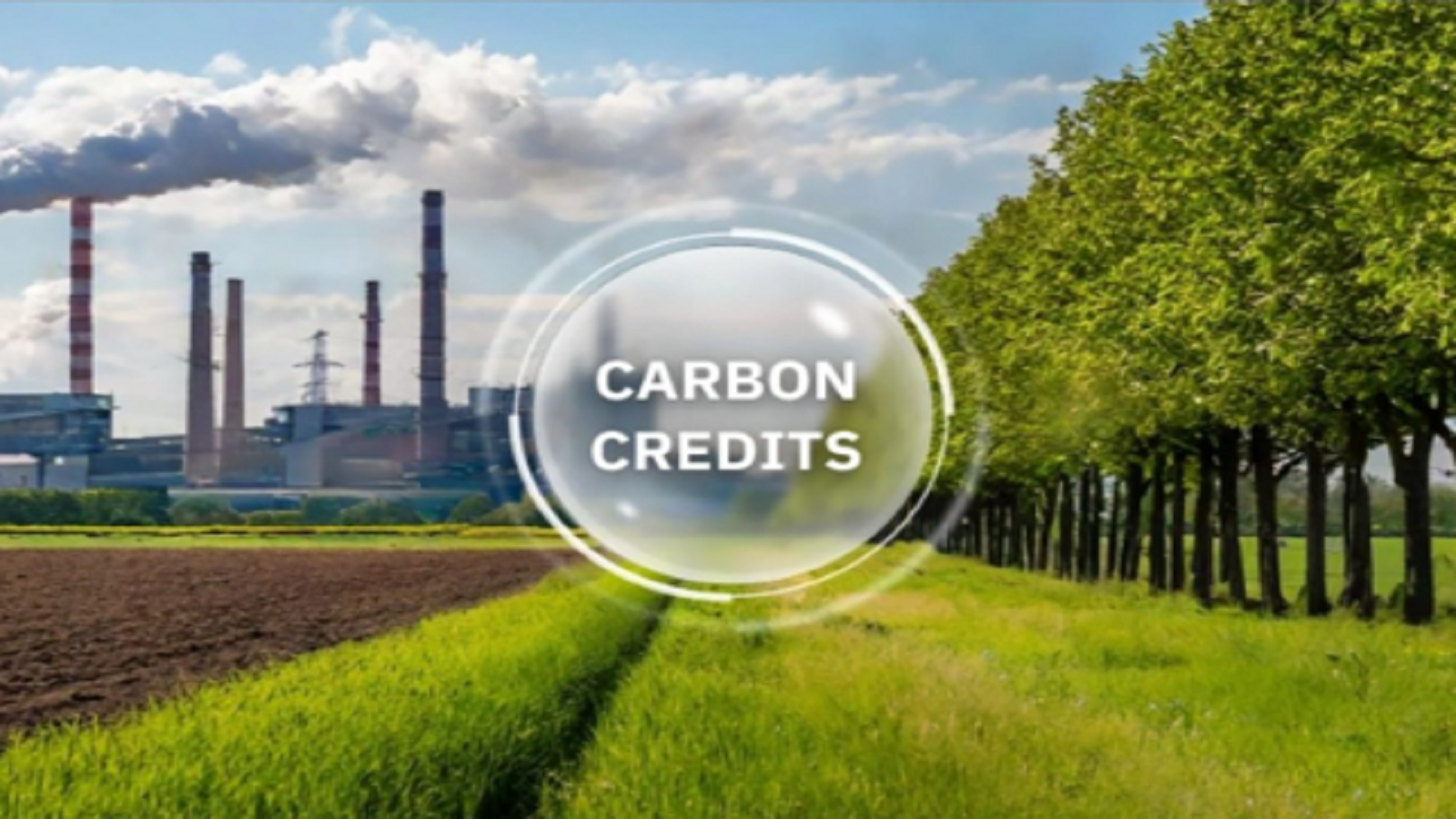
Carbon credits are emerging as an effective financial tool to reduce greenhouse gas emissions. One carbon credit represents one ton of CO₂ reduced or offset. According to the World Bank, the global carbon credit market reached USD 850 billion in 2024, up nearly 40% from the previous year. The Asia-Pacific region—especially Viet Nam—is expected to become a major carbon trading hub thanks to the rapid growth of renewable energy and nature-based conservation projects.
Over the past decade, Viet Nam’s green growth strategies have focused on restructuring the economy and transforming growth models to achieve economic prosperity alongside environmental and social sustainability.
Viet Nam’s commitment to achieving Net Zero by 2050, announced at COP26, has elevated its international standing and demonstrated determination in confronting climate change. One of the key solutions is developing a carbon credit trading market. This mechanism not only helps reduce greenhouse gas emissions but also opens opportunities for international cooperation and investment in green projects—such as participation in the EU Emissions Trading System (EU ETS) and other global initiatives.
Viet Nam’s legal and policy frameworks have gradually shaped its carbon market, including:
Resolution 24-NQ/TW
Resolution 55-NQ/TW
Law on Environmental Protection
Decree 06/2022/NĐ-CP
The Government has established a solid legal foundation targeting 563.8 million tons of CO₂-eq reductions by 2030. The National Green Growth Strategy (2021–2030) also emphasizes establishing a carbon market and synchronized emissions trading mechanisms.
Viet Nam’s roadmap includes:
2025 – Pilot carbon credit market
2027 – Complete legal framework
2028 – Official launch of carbon trading exchange
Many Vietnamese enterprises recognized the importance of green transition even before 2025. Vingroup, for example, is investing heavily in renewable energy and electric vehicles (VinFast), exporting to advanced markets and committing to decarbonization across its value chain.
The agriculture sector—one of Viet Nam’s economic pillars—is adopting sustainable farming models including organic fertilizers and water-saving irrigation. In the Mekong Delta, sustainable rice farming has reduced emissions while improving yields, enhancing export value.
With nearly 15 million hectares of forests, Viet Nam’s forestry sector holds exceptional carbon absorption potential. From 2021–2030, Viet Nam could supply 40–70 million forest carbon credits, equivalent to tens of trillions of VND in revenue. In 2023, Viet Nam successfully transferred 10.3 million forest carbon credits (2018–2024) to the World Bank at USD 5/ton, earning USD 51.5 million—funds used to support forest protection and community livelihoods in the North Central provinces.
The carbon market opens a new chapter for the Vietnamese economy, offering substantial potential for emission reduction and sustainable development. It presents an opportunity not only to generate revenue but also to affirm Viet Nam’s pioneering role in global climate action and environmental protection.
However, to realize these ambitions, Viet Nam must deploy concrete measures and create transparent, synchronized mechanisms for market operation.
While the 2020 Environmental Protection Law and Decree 06/2022/NĐ-CP laid essential groundwork, detailed guidelines on:
greenhouse gas inventory
verification
reporting
emissions allowance allocation
carbon credit trading
are still needed. Experience from Indonesia and the EU shows that governments must develop robust measurement, reporting, and verification (MRV) systems suited to national conditions.
Human resource development in carbon management is also crucial. Collaboration with educational institutions is needed to train experts and equip businesses and government agencies with essential skills.
Heavy industries must adopt stronger emission-reduction technologies, including:
alternative fuels
energy efficiency improvement
carbon capture
Financial incentives and investment support policies are necessary to encourage adoption.
With 42% forest cover, Viet Nam can generate millions of carbon credits through reforestation and conservation projects. Sustainable farming—especially in rice production—can reduce emissions while increasing farmers’ incomes.
The Ministry of Agriculture and Rural Development is assessing national and local carbon absorption potential and establishing monitoring and verification systems.
Programs such as the North Central ERPA project—where Viet Nam sold forest carbon credits to the World Bank—highlight the enormous potential for revenue and climate benefits. International partnerships help Viet Nam align with global standards and improve MRV systems, making it easier for enterprises to participate in carbon markets.
Đỗ Trang
Tags: carbon credit exchange, carbon market, carbon credits
Source: Pháp luật Việt Nam