


Video 1
04/12/2025
The United Nations Children’s Fund (UNICEF) reported on September 18 that severe flooding and landslides triggered by Typhoon Yagi have affected nearly 6 million children across Southeast Asia, particularly in access to clean water, education, healthcare, food, and shelter.
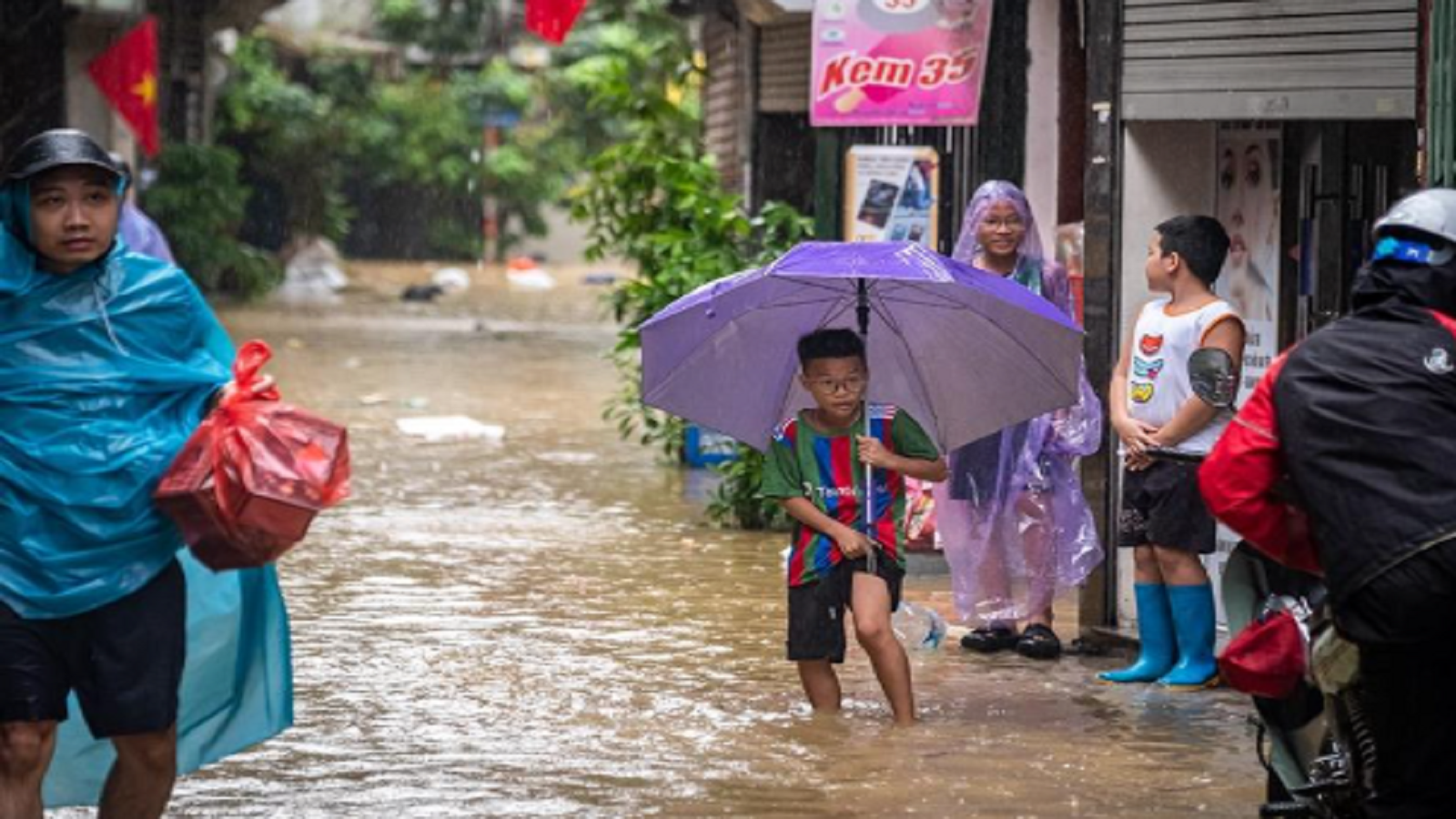
According to UNICEF, the flooding and landslides caused by Typhoon Yagi have devastated Viet Nam, Myanmar, Laos, and Thailand, affecting nearly 6 million children and reducing access to clean water, education, healthcare, food, and safe shelter.
June Kunugi, UNICEF Regional Director for East Asia and the Pacific, stated:
“Children and the most vulnerable families are facing the most devastating consequences left by Typhoon Yagi. The immediate priority is to restore essential services for children and families, including clean water, education, and healthcare. The increase in extreme weather events in Southeast Asia, worsened by climate change, serves as a reminder that when disasters strike, the most vulnerable children often suffer the most.”
As the strongest storm to make landfall in Asia this year, Typhoon Yagi brought intense rainfall on top of seasonal rains, causing river levels to rise and triggering deadly landslides. Following the storm, more than 850 schools and over 550 health centers were damaged—most of them in Viet Nam—and UNICEF continues to conduct assessments across the region.
In Viet Nam, the country hardest hit by Typhoon Yagi, roughly 3 million people—including many children—lack access to clean water and sanitation, increasing the risk of disease. Around 2 million children have also lost access to education, psychosocial support, and school nutrition programs.
In Myanmar, the compounded burden of prolonged conflict and the catastrophic impacts of Typhoon Yagi has worsened the crisis for communities already displaced by conflict, further straining an already critical humanitarian situation. More than 170 people have died and over 320,000 have been displaced, while transport, telecommunications, and power infrastructure in central Myanmar have suffered severe damage.
In northern Thailand, heavy rainfall and flooding have severely affected nearly 64,000 children, with several schools reported to be completely destroyed. Teachers have had to switch to online learning and distribute learning materials for students to study at home.
In Laos, floods have occurred in eight provinces, affecting approximately 60,000 children, damaging essential infrastructure and threatening the livelihoods of communities already struggling with climate-related challenges.
UNICEF, in coordination with humanitarian partners, is providing emergency assistance to children and families in flood-affected areas across Southeast Asia. Relief efforts include distributing clean drinking water, hygiene supplies, nutritional supplements, and medical kits, as well as offering mental health support and providing learning and recreational materials to help children regain a sense of normalcy and continue studying and playing in safe environments. UNICEF also pledges to work with partners to ensure that recovery efforts prioritize the needs of children once the floodwaters recede.
Children in East Asia and the Pacific are facing multiple climate and environmental hazards—six times more than previous generations. The increasing frequency and overlapping impacts of weather- and climate-related events make it harder for children to adapt, deepen inequalities, and undermine their development potential.