

Video 1
04/12/2025
Under Resolution No. 136/2024/QH15 on urban governance and piloting special mechanisms and policies for Da Nang’s development (effective January 1, 2025), the National Assembly has authorized Da Nang to pilot a financial mechanism for implementing greenhouse gas emission reduction measures through carbon credit exchange and offset mechanisms. This is a pioneering policy and an important resource that will help Da Nang advance green development while promoting the growth of Vietnam’s carbon market.
NetZero.VN – 22/02/2025
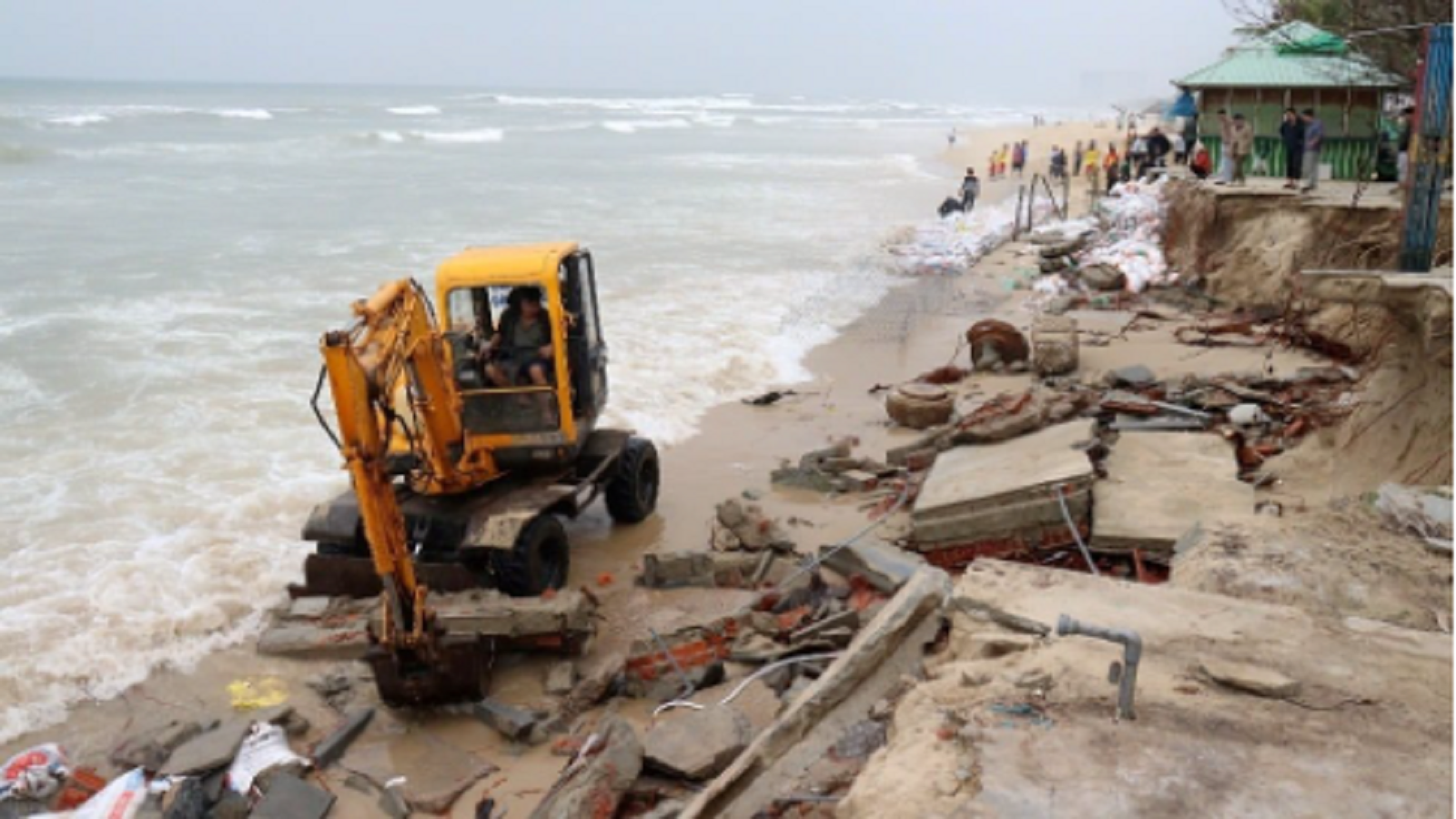
The year 2024 witnessed alarming increases in the frequency, intensity, and damages of natural disasters—far higher than in previous years. This reality calls for urgent collective action to reduce carbon emissions, restrain global warming, and mitigate the impacts of climate change.
Under normal circumstances, many people may barely perceive the rise in average global temperature—about 1.5°C above pre-industrial levels. But what people clearly feel is the change in extreme temperatures—hotter heatwaves and harsher cold spells. Global warming, in other words climate change, has not only made temperatures more extreme but has also increased extreme rainfall, stronger storms, sea-level rise, and more.
Mai Van Khiem, Director of the National Center for Hydrometeorological Forecasting, stated:
“Global warming is one of the key factors making weather, climate, and natural disasters increasingly abnormal worldwide and in Vietnam.”
In 2024:
Vietnam experienced a record-breaking heatwave lasting 70 days in the Southeast region during March–April.
In April 2024, temperatures reached 44°C in Quang Tri, the highest ever recorded.
Most notably, Typhoon No. 3 (Yagi) covered nearly the entire northern region and even extended into the North Central Coast. For the first time in Vietnam, instruments recorded gusts up to level 17 on land, accompanied by widespread heavy rainfall, major river flooding, flash floods, and landslides lasting several days. This demonstrates the unprecedented and abnormal nature of natural disasters under climate change.
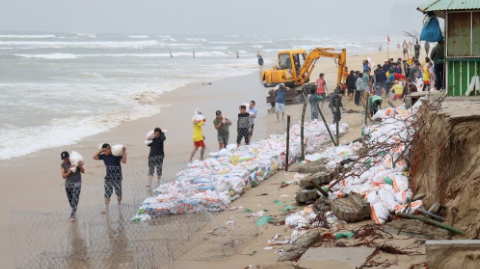
At the beginning of 2025, Da Nang’s People’s Committee declared a state of emergency due to the most severe coastal erosion at My Khe Beach in 25 years. Despite being a modern, fast-growing coastal city, Da Nang has suffered extensive damages from climate-related disasters—storms, heavy rains, flooding, heatwaves, drought, and coastal erosion.
A devastating example was the historic rainfall event in October 2022, which caused severe losses to homes, public infrastructure, and livelihood activities across the city.
Weather patterns are clearly becoming more complex than predicted, as shown by abnormalities in temperature, rainfall, sea-level rise, and other extreme weather events. Effective disaster response and climate adaptation now require strong action from the entire political system—from central to local levels—along with support from domestic and international organizations, businesses, and citizens.
Forecasting 2025 weather patterns, Director Mai Van Khiem notes that with global temperatures continuing to rise, Vietnam will face increasingly harsh heatwaves, along with severe localized downpours, flash floods, landslides, storms, and even super-typhoons.
Greenhouse gases (CO₂, CH₄, N₂O—especially CO₂) are the primary drivers of global warming, leading to climate change, natural disasters, and environmental degradation.
At COP26 in Scotland (UK) in 2021, the international community reaffirmed the goal of limiting global warming to 1.5°C. Achieving this requires:
A 45% reduction in CO₂ emissions by 2030 compared to 2010
Achieving Net Zero by 2050
According to Doan Truong Giang, Deputy Director of the Center for Natural Resources and Environment Communication, Vietnam is among the countries most severely affected by climate change—sea-level rise, natural disasters, and increasing extreme weather.
More than 140 countries, including Vietnam, have set or pledged Net Zero targets. Therefore, green investment and green finance are no longer optional—they are essential in achieving Net Zero.
“To address the shortage of resources for green growth and climate resilience, Vietnam must strengthen international cooperation. Developing the green finance market and carbon market is a top priority requiring the participation of the entire political system and the business community,”
— Doan Truong Giang
Vo Nguyen Chuong, Deputy Director of Da Nang’s Department of Natural Resources and Environment, emphasized that although Vietnam is a low-carbon-emission country, it has shown strong international commitment by pledging Net Zero by 2050. Da Nang is actively working toward the carbon-neutral goal.
519 deaths and missing persons — triple 2023, and 2.47 times the 10-year average (2014–2023)
2,212 injured
Economic losses: 89,089 billion VND — 9.5 times 2023 and 4.2 times the 10-year average
Lan Anh – Hoàng Hiệp
TAGGED: climate change, emission reduction
SOURCE: Natural Resources & Environment Newspaper