

Video 1
04/12/2025
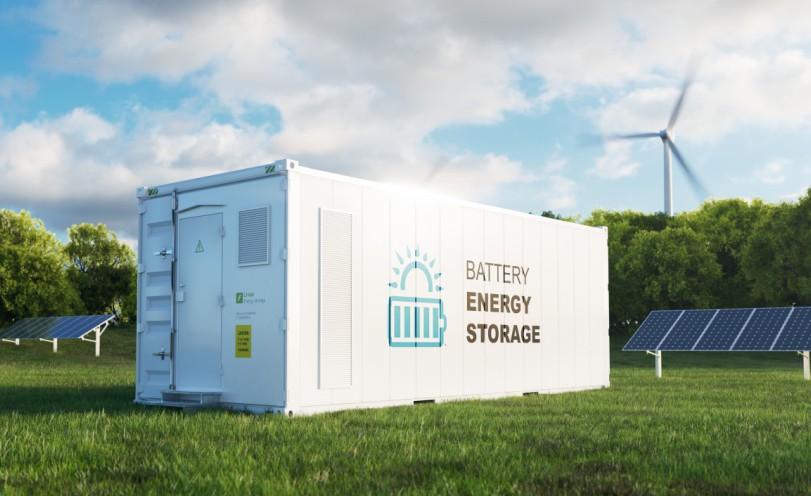
Azerbaijan, the host of the 29th Conference of the Parties to the United Nations (UN) Framework Convention on Climate Change (COP29), called on more than 190 countries to support the goal of increasing global energy storage capacity sixfold by 2030.
It is one of the priorities of the agenda including global initiatives and commitments that Azerbaijan will put forward at the COP29 conference.
Bloomberg News reported that the draft proposal, called the Global Green Energy Storage Commitment, will be presented at the COP29 conference in Baku, Azerbaijan, in November. The proposal is similar to the agreement signed by the G7 industrial powers in April on the target of increasing global energy storage capacity to 1,500 gigawatts by the end of the decade, from 230 gigawatts in 2022.
That capacity level is in line with International Energy Agency (IEA) recommendations to achieve greenhouse gas emission reduction targets agreed at the COP28 conference late last year in the United Arab Emirates (UAE).
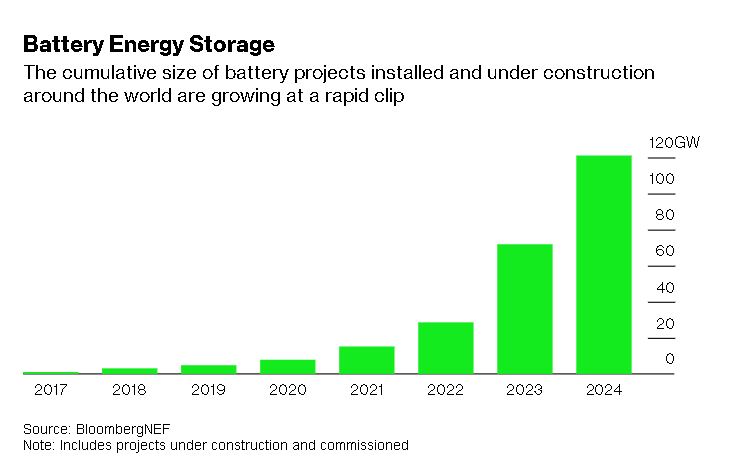
To achieve that goal, the world will need to add an average of more than 158 GW of energy storage capacity each year until 2030. This will also require large amounts of batteries to allow grids around the world to store excess solar and wind power, which can be deployed when the sun is not shining or the wind is not blowing.
Another increasingly popular source of energy storage is pumped hydropower, in which water is pumped from a lower reservoir to an upper reservoir during off-peak demand periods. The water is then released back into the lower reservoir to generate electricity when demand is at its peak. As of last year, the world had about 179 gigawatts of pumped hydropower and about 85 gigawatts of battery storage, according to data from the International Hydropower Association and the IEA.
According to the IEA, battery storage is now 90% cheaper than it was 15 years ago. When coupled with solar farms, battery storage could be a cheaper alternative to building coal plants in India. The combination is expected to soon rival the cost of gas in the US and new coal plants in China.
The average cost of lithium-ion batteries has plummeted to $139/kWh by 2023, from nearly $800/kWh 10 years ago, according to Bloomberg New Energy Finance (BNEF).
But battery costs need to fall further for the industry to take off, analysts say, and the battery supply chain, currently dominated by China, needs to become more diversified.
Azerbaijan’s proposal encourages COP29 members to consider developing new, cheaper batteries and standardizing recycling models to make it easier to reuse expired batteries.
Other priorities set by Azerbaijan on the COP29 agenda include expanding and upgrading its electricity grid and cutting methane emissions from organic waste. Methane is a greenhouse gas 80 times more potent than carbon dioxide.
On September 17, in a letter to countries and organizations attending the upcoming COP29 conference, Azerbaijan’s ecology minister, Mukhtar Babayev, who has been designated as the COP29 president, quoted the warning of Nizami Ganjavi, a 12th-century Azerbaijani poet and thinker, that “humanity will destroy itself” unless it lives in harmony with nature.
He proposed that countries adopt targets for reducing methane, which is released during waste treatment and food production. According to the United Nations, waste is the third largest source of man-made methane, after the energy sector and agriculture.
One of the thorniest issues for diplomats at COP29 is agreeing on how much rich countries should contribute each year to help poor countries cope with climate change. Many developing countries say they cannot raise their greenhouse gas emission reduction targets without more financial support.
With such an agreement currently deadlocked, host Azerbaijan is expected to propose a series of small initiatives that do not require negotiation or consensus. These include the creation of a new climate finance action fund, which initially aims to raise about $1 billion in voluntary contributions from fossil fuel countries and companies.
Khanh Lan (According to Bloomberg, Reuters, Financial Times )