

Video 1
04/12/2025
According to the latest Global Carbon Budget report, global CO₂ emissions—primarily from the burning of fossil fuels—are projected to reach record-high levels.
The report, released at the 29th Conference of the Parties to the UNFCCC (COP29), shows that total global CO₂ emissions in 2024 will reach approximately 41.6 billion tonnes, up from 40.6 billion tonnes the previous year. Of this amount, emissions from coal combustion, oil extraction and consumption, and natural gas account for the vast majority. These fossil fuel–related activities alone are projected to generate 37.4 billion tonnes of CO₂ in 2024, an increase of 0.8% compared to 2023. The remaining emissions come from land-use activities, including deforestation and wildfires.
Pierre Friedlingstein, the report’s lead author, warned that without immediate action to reduce emissions, global temperatures will continue to rise rapidly and may exceed the 1.5°C threshold set under the Paris Agreement on climate change.
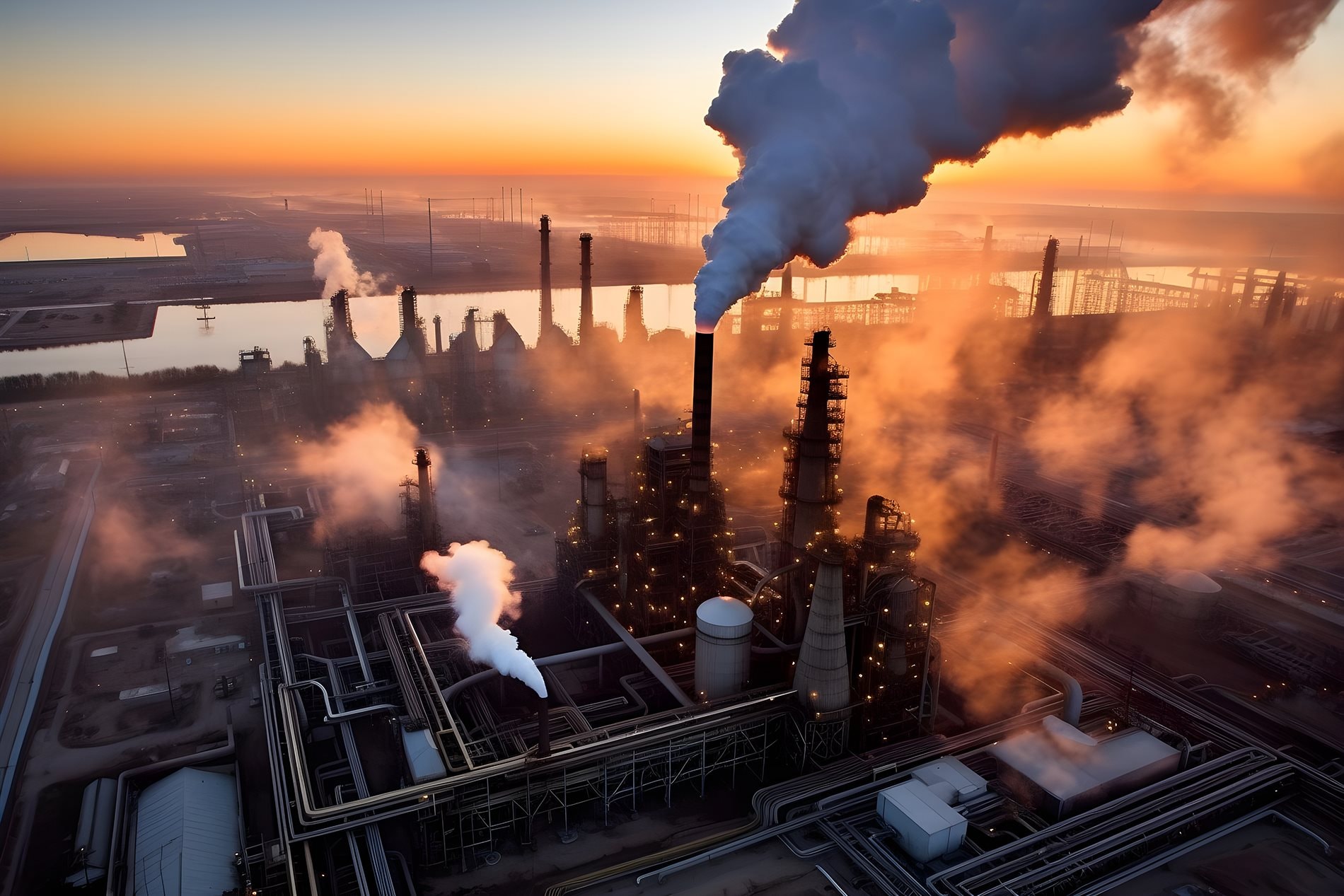 Illustrative image
Under the 2015 Paris Agreement, nations agreed to limit global temperature increases to below 1.5°C in order to avoid the worst impacts of climate change. This requires deep annual emission cuts from now through 2030 and beyond. However, fossil-fuel emissions have continued to increase over the past decade. Some scientists argue that such slow progress means the 1.5°C target is now out of reach.
The report also highlights 2024 emissions data, showing rapid renewable energy and electric vehicle expansion in some countries. However, the pace of action remains inconsistent—particularly when compared to the emissions of wealthier industrialized nations and emerging economies.
Earlier, the UK Met Office also forecast that atmospheric CO₂ concentrations in 2024 would rise above the pathway required to limit global warming to 1.5°C. Specifically, the Met Office projects that rising fossil-fuel emissions and ongoing deforestation will worsen in 2024 due to the cyclical El Niño phenomenon, which reduces the ability of tropical forests to absorb CO₂. As a result, average CO₂ concentrations in 2024 are expected to increase significantly. Measurements from the Mauna Loa Observatory in Hawaii are projected to show CO₂ concentrations rising by about 2.84 parts per million (ppm) compared to 2023.
According to the United Nations Intergovernmental Panel on Climate Change (IPCC), if emissions remain at current levels, the world will surpass the 1.5°C threshold in the early 2030s — and there is no indication that the world is currently on track to avoid this outcome.