

Video 1
04/12/2025
HNN – The Global Methane Budget 2024—a comprehensive analysis of methane trends and their impacts conducted by the Global Carbon Project—reveals that global methane emissions have soared to record levels, driven primarily by human activity and posing serious risks to climate targets.
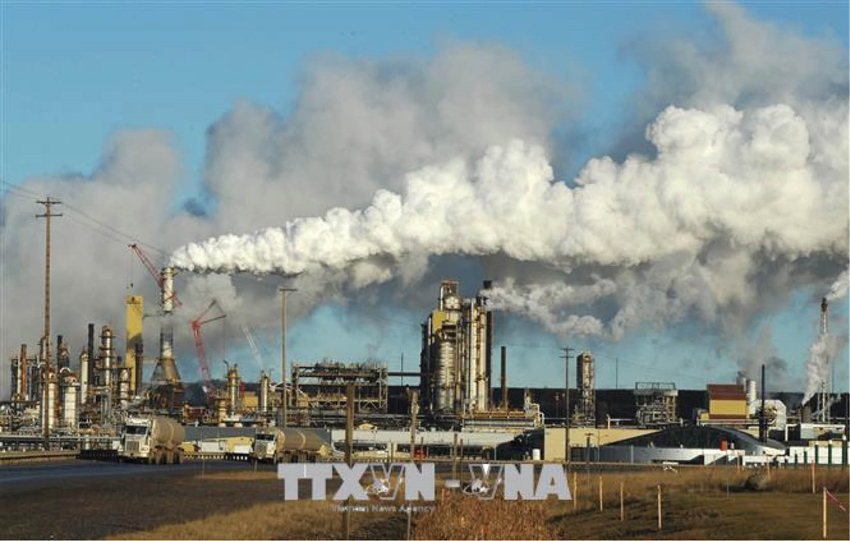 Coal mining and oil-and-gas production release significant amounts of methane. (Illustration: AFP/TTXVN)
The report shows that human activities now account for at least two-thirds of global methane emissions. Despite international efforts to curb output, anthropogenic methane emissions have increased by 20% over the past two decades.
Recorded data indicates that atmospheric methane concentrations reached 1,923 parts per billion in 2023, 2.6 times higher than pre-industrial levels and the highest in 800,000 years.
This trajectory “cannot continue if we want to maintain a livable climate,” the researchers wrote, warning that current trends jeopardize the Paris Agreement goal of limiting global warming to no more than 1.5°C.
Methane is an extremely potent greenhouse gas, produced naturally in wetlands and through human-driven processes such as agriculture and fossil-fuel operations. During the first 20 years after it is released, methane warms the atmosphere nearly 90 times faster than CO₂.
Scientists emphasize that tackling methane emissions is essential for achieving climate goals, particularly because no existing technology can directly remove methane from the atmosphere.
The world’s five largest methane emitters are currently:
China: 16%
India: 9%
United States: 7%
Brazil: 6%
Russia: 5%
The report also finds that agriculture—including livestock and rice cultivation—remains the largest source of human-caused methane, accounting for 40% of global emissions. Fossil fuels account for 34%, waste management 19%, and biomass burning 7%.
Emissions have risen across these sectors due to expanding activity in developing regions and continued fossil-fuel extraction.
Although major international pledges exist—such as the Global Methane Pledge, signed by 150 countries aiming to reduce methane emissions by 30% by 2030—progress remains inadequate. According to Stanford University scientist Rob Jackson, chair of the Global Carbon Project, these targets “now seem very distant,” with little evidence that the world is moving in the right direction.
From 2020 to 2023, satellite data shows methane emissions increased another 5%, with the largest growth recorded in China, South Asia, and the Middle East—primarily from coal and oil-and-gas production.
Researcher Marielle Saunois of Paris-Saclay University notes that “only the European Union and Australia appear to have reduced anthropogenic methane emissions over the past two decades.” If current trends persist, the report warns that reaching the goals of the Global Methane Pledge will be extremely difficult.
TỐ QUYÊN (Adapted from The Washington Post)