

Video 1
04/12/2025
Renewable energy is attracting massive global investment, yet clean power is increasingly wasted because it cannot be connected to national electricity grids. The U.S., Japan, China, Europe, and ASEAN countries are now racing to upgrade transmission networks and develop cross-border power systems.
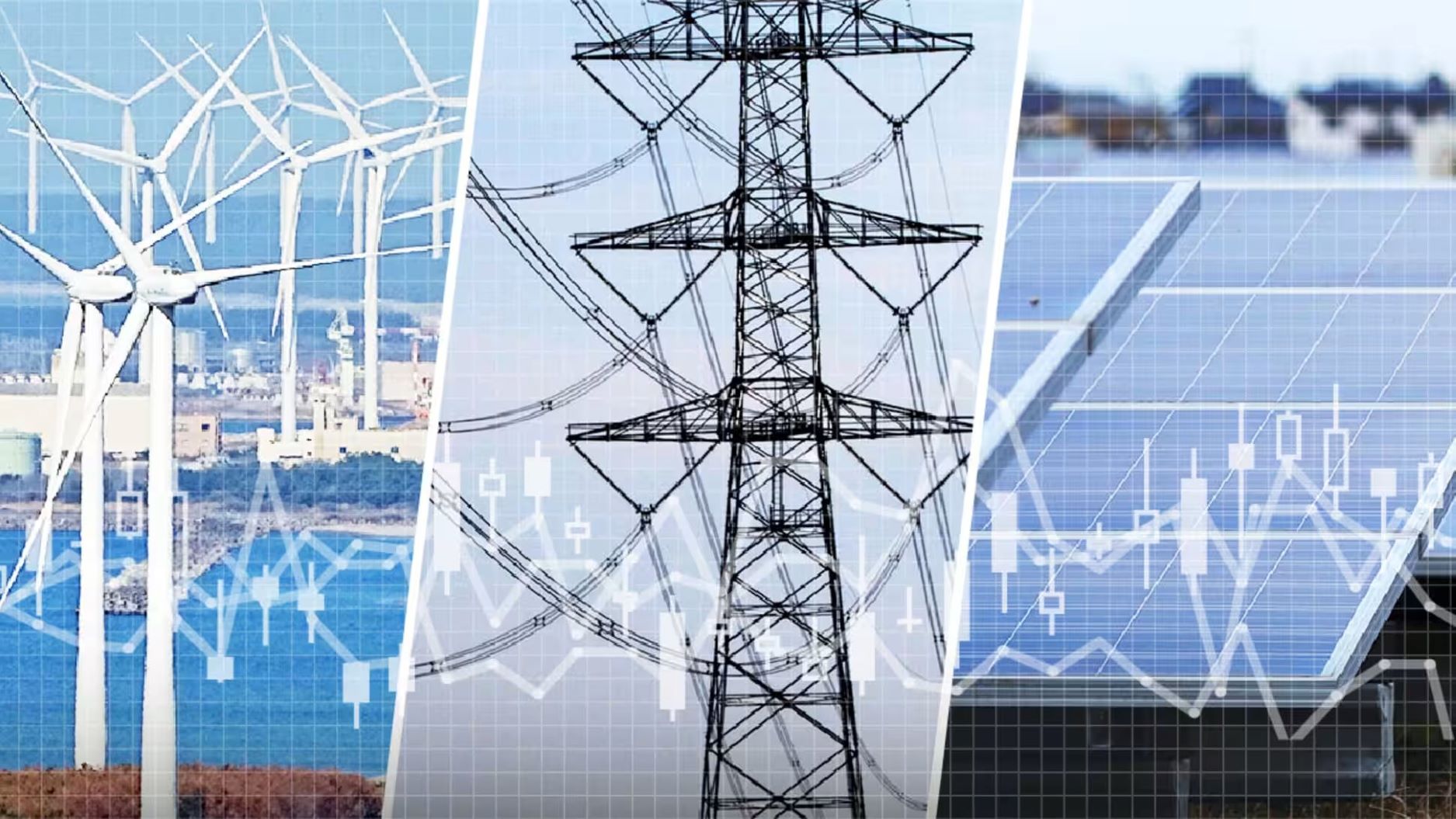 Power transmission infrastructure has become the biggest “bottleneck” holding back renewable-energy development across the U.S., Europe, and Asia.
A Global Bottleneck: Grid Capacity Cannot Keep Up
In Asia, South Korea rejected approval for a major offshore wind farm backed by BlackRock in January, citing insufficient grid capacity.
According to the International Energy Agency (IEA), the world added 560 GW of new renewable-energy capacity in 2023, up 64% compared with 2022. However, many of these projects cannot be connected to the grid due to being located far from existing fossil-fuel or traditional power plants. The expansion of transmission networks has failed to keep pace with the rapid boom in renewables.
In the U.S., 1,500 GW of renewable-energy capacity was unable to connect to the grid in 2023—nine times higher than in 2015, according to the Lawrence Berkeley National Laboratory. Most of these are solar and wind projects.
Junichi Ogasawara, senior research director at the Institute of Energy Economics, Japan, noted:
“Applications for grid connection surged in the U.S. after the Inflation Reduction Act introduced subsidies and tax incentives.”
Europe faces similar challenges despite having a vast network. As the region reduces dependence on Russian gas and accelerates decarbonization, large-scale renewable investments have strained the grid. BloombergNEF reports that in Europe’s four largest economies, 860 GW of solar and wind capacity is currently waiting for grid connection.
Combined, unconnected solar and wind projects in the U.S. and Europe could generate over 3,300 terawatt-hours annually—equivalent to the output of 480 standard nuclear reactors.
Grid Investment Lags Behind Renewables
Global investment in clean-energy generation reached $670 billion in 2023, nearly double the level in 2015.
But grid investment remains stagnant at around $330 billion—less than half the spending on new renewable projects.
While renewable plants can be built in a matter of months or a few years, large-scale transmission expansion often requires a decade or more, from planning to completion. Complex permit procedures and rising raw-material costs further delay progress, discouraging investors.
Japan, despite incomplete grid-expansion efforts, decided in 2021 to allow new renewable projects to connect to the existing grid. Authorities acknowledged the risk of grid overload but prioritized accelerating renewable deployment.
Masataka Kobayashi of Japan’s Organization for Cross-regional Coordination of Transmission Operators said the backlog of renewables awaiting grid access has decreased, but risks remain.
As more renewable projects come online, they could destabilize the grid, forcing operators to curtail renewable output. Japan’s Agency for Natural Resources and Energy forecasts that unused renewable power due to grid limitations may increase 40% in FY2024, particularly in regions like Kyushu where renewable penetration is rapidly rising.
Based on current national climate commitments, the IEA estimates renewables could make up 60% of global power by 2050. But if grid shortages worsen, this could fall to 40%, forcing countries to rely more on natural gas and coal.
Countries Push for Solutions
To overcome the bottleneck:
• Europe
Developing cross-border smart grids to share renewable resources and enhance system stability.
• United States
Announced an additional $2.2 billion in August to modernize the grid.
• Japan
Plans to invest 6,000–7,000 billion yen ($42–49 billion) in transmission networks by 2050.
• China
Investing heavily in ultra-high-voltage (UHV) DC transmission lines connecting renewable-energy hubs in the northwest and southwest to major urban load centers including Beijing, Shanghai, Chongqing, Tianjin, and coastal provinces.
• ASEAN
Building cross-border renewable-energy projects and interconnected transmission networks as part of the ASEAN Power Grid initiative.