

Video 1
04/12/2025
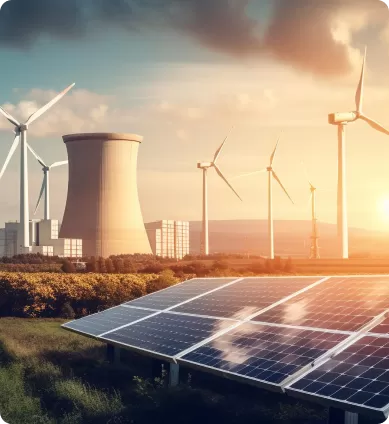
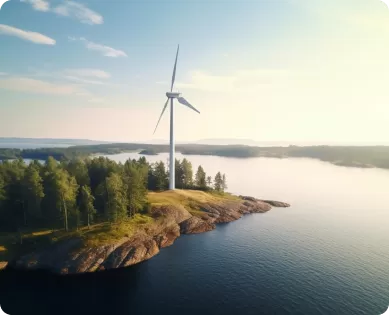
As a global trend and an inevitable, objective choice, green growth has been strongly prioritized and promoted by the Government and the Prime Minister, with ministries, sectors, and localities making proactive and determined efforts. These actions have generated positive results, reinforcing Vietnam’s strong commitment to realizing its Net Zero target by 2050.
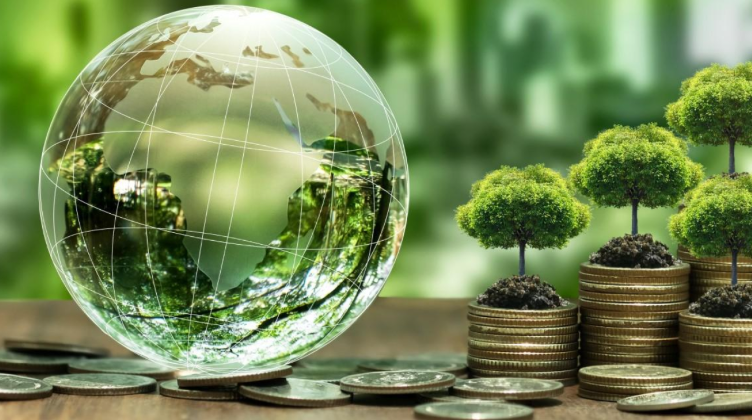
Green growth has emerged as a new development approach for economies worldwide, including Vietnam.
To realize its green growth objectives, Vietnam is implementing a series of major national strategies, such as the National Green Growth Strategy for 2021–2030 with a vision to 2050, and the National Climate Change Strategy to 2050.
In line with these orientations, Vietnam has been transitioning its production model toward greening key economic sectors and aligning with global trends in green economic development. Green transition efforts have been actively integrated and promoted across national, sectoral, and local strategies, master plans, action plans, and programs.
At the same time, the green transition is being driven forward through digital transformation, forming a dual transformation that opens significant opportunities and creates strong momentum for Vietnam and its business community to shift toward sustainable business models. However, this trajectory also poses challenges related to institutional frameworks, financing, and technology.

Mr. Le Viet Anh, Director General of the Department of Science, Education, Natural Resources and Environment under the Ministry of Planning and Investment, emphasized:
“Green growth has become a top priority for most countries worldwide as they pursue long-term sustainable development. This is also a highly significant strategic direction for Vietnam’s socio-economic development in the years ahead.”
Accordingly, the National Action Plan on Green Growth outlines a wide range of tasks and solutions for all stakeholders, guided by the principle that no one is left behind.
For the business community, Mr. Le Viet Anh noted that the action plan sets out specific solutions and responsibilities for ministries, sectors, and enterprises participating in the green growth process. Vietnam has already identified various incentives for enterprises, including both financial and non-financial measures.
Financial incentives are clearly stipulated in government decrees and sectoral regulations concerning taxes, access to finance, interest rates, and other cost-related factors. These supportive mechanisms are well-defined within the policy framework issued by relevant ministries and agencies.
In addition, the Government also provides non-financial incentives for enterprises. Companies that commit to the green growth transition may be considered for streamlined and favorable investment and business procedures. However, enterprises seeking to benefit from these incentives must also meet established criteria and principles associated with the green growth process.
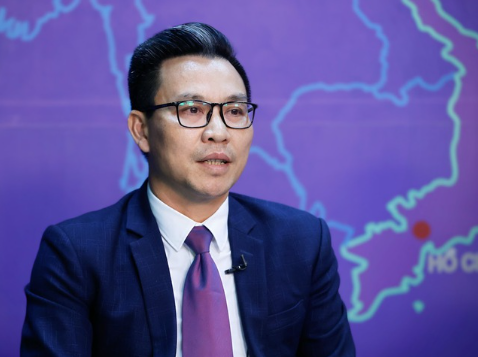
Highlighting that sustainable development is not only a global trend but also an essential requirement for Vietnamese businesses aiming to enter international markets, Mr. Quach Quang Dong, Deputy Director General of the Department of Energy Efficiency and Sustainable Development under the Ministry of Industry and Trade, noted that Vietnam has now joined several new-generation free trade agreements (FTAs). Most of these agreements include commitments to eliminate up to 100% of import tariffs among member countries.
According to Mr. Dong, such tariff commitments pose significant challenges for developed countries in protecting their domestic industries from price competition with developing nations—Vietnam included—whose advantages include lower labor costs, lower energy expenses, and less stringent environmental standards.
As a result, developed countries may establish and enforce more technical barriers, particularly regarding product quality, origin verification, and environmental protection standards, thereby limiting the entry of low-priced goods from developing economies.
Conversely, Mr. Dong emphasized that the reduction of import tariffs to 0% in countries participating in new-generation FTAs presents a major opportunity for Vietnamese enterprises seeking to expand abroad.
“However, to seize the opportunities offered by these new-generation FTAs, Vietnamese businesses must undergo a profound shift in mindset and strategy to meet the demands of sustainable development and green growth,” he stressed. Enterprises must pay close attention to product quality and environmental standards in accordance with the ‘rules of the game’ set by developed countries, while simultaneously leveraging national advantages such as competitive labor costs.
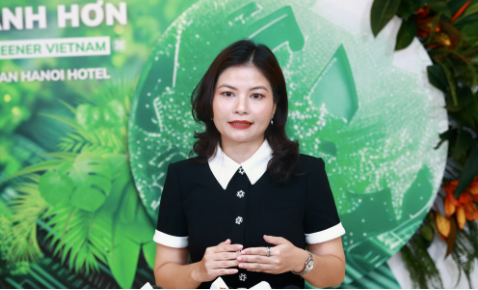
From the business perspective, Ms. Le Thi Hoai Thuong, Senior Public Affairs Manager at Nestlé Vietnam, noted that sustainability standards present both challenges and opportunities. For any enterprise, increasingly stringent requirements necessitate transformation and new investments. Companies within the supply chain—such as Nestlé—face particular challenges, especially in achieving synchronized development across the entire value chain.
To reduce emissions in agriculture and supply chains, Nestlé has established principles on responsible sourcing, sustainable sourcing, and regenerative sourcing, working directly with farmers to persuade and support them in transitioning toward greener practices through technology and capacity building. The company has also introduced a set of “green standards” that suppliers must meet in order to collaborate with Nestlé. These efforts help align the entire supply chain, enabling smoother implementation of green transition plans.
Meanwhile, Ms. Tran Ngoc Anh, Senior External Affairs Director at HEINEKEN Vietnam, shared that in its pursuit of Net Zero, the company aims to achieve net-zero emissions in production by 2030 and net-zero emissions across its entire value chain by 2040.
Thanks to accelerated energy-transition efforts, HEINEKEN Vietnam reached 99% renewable energy usage in production by 2023, while maintaining zero waste-to-landfill status at all factories since 2021 through effective circular-economy practices.
All by-products and waste generated during production are now recycled, reused, or transformed into value-added products within other value chains. For example, spent grain and surplus yeast are converted into animal feed; sludge from wastewater treatment is reused as fertilizer and clean soil; and biogas generated during the process is recovered and used as thermal energy for brewing.
In 2023, the company also reduced CO₂ emissions from production by 93% compared with 2018, marking major progress toward its Net Zero production ambition.
However, regarding the target of achieving net-zero emissions across the entire value chain by 2040—ten years ahead of Vietnam’s national commitment—Ms. Tran Ngoc Anh acknowledged that it is still too early to give a definitive answer. Nevertheless, with a long-term commitment to accompany Vietnam for the next 30 years and beyond, the company believes this is the only right path to contribute to both national and global climate goals.
Minh Nhat
TAGGED: Green Growth
SOURCE: Nhip Song Kinh Doanh