
Video 1
04/12/2025
Kinhtedothi – Despite many challenges, Hanoi is on the right track and leading the country in converting to green public transport. However, to achieve the set roadmap, there needs to be consensus from all levels, sectors of the city and the people of the capital.
Strong attraction
Green transportation is the use of means of transport that limit CO2 emissions and other toxic emissions into the environment. Green transportation is the use of human power, renewable energy, electricity, compressed natural gas… such as using bicycles, motorbikes, electric cars, vehicles running on compressed gas (CNG); vehicles using solar energy, wind energy… Converting to green energy vehicles is an inevitable trend in the world, including Vietnam.
In Vietnam, the use of green energy vehicles is still quite new, people do not have the habit of using bicycles or public transport to travel, most of them still depend on personal vehicles running on gasoline and oil. Although there are many difficulties and challenges, Hanoi is making every effort and is one of the leading localities in the country in converting green energy to the transport sector.
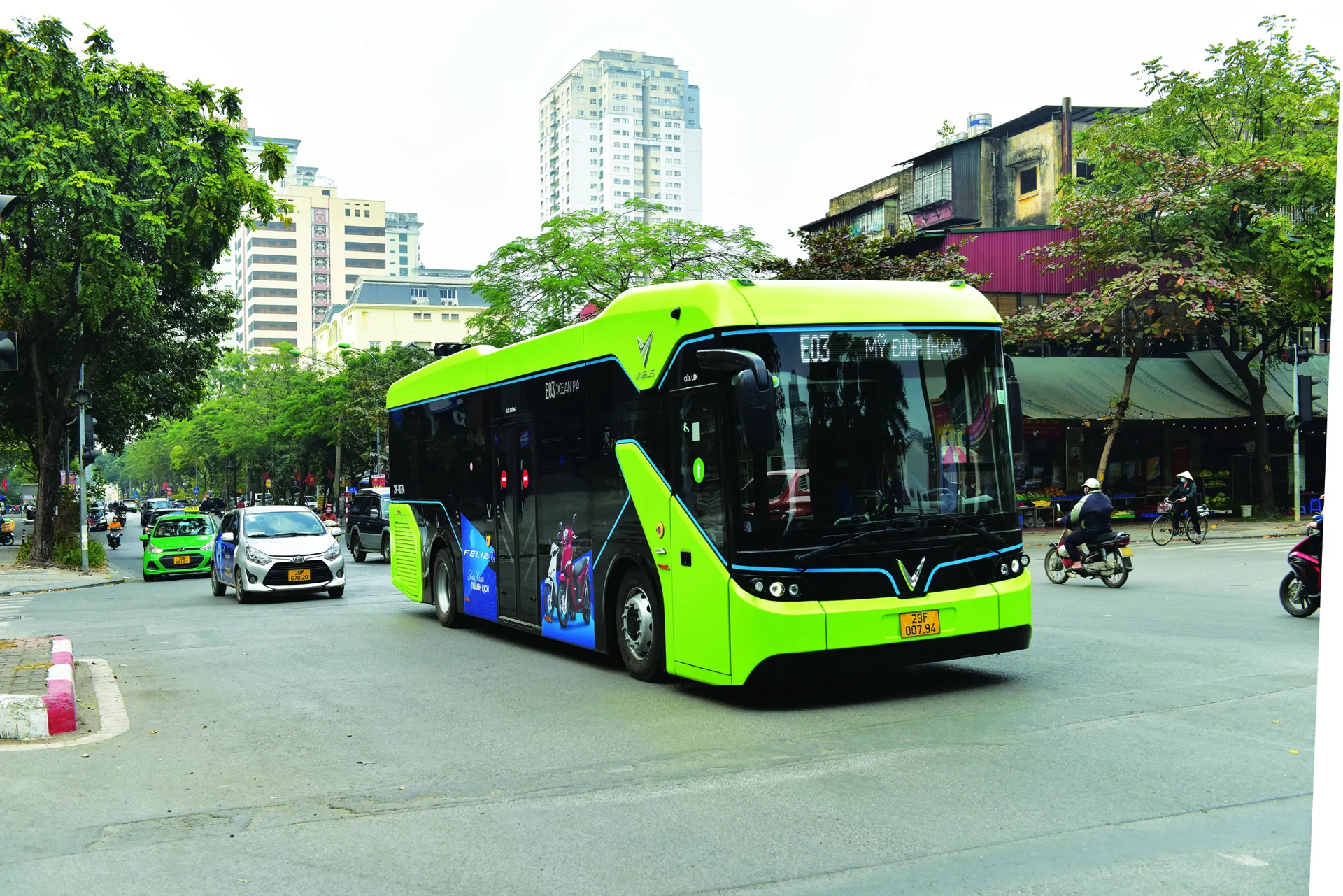
A representative of the Department of Transport said that currently, Hanoi has 132 subsidized bus routes with more than 2,000 buses, of which 277 are electric and use clean CNG fuel, accounting for 13.6% of the total number of vehicles. This greening rate of transportation is the result of the efforts of both businesses and the city. Along with that, Hanoi has licensed thousands of electric taxis; and introduced bicycles and public electric bicycles to serve the travel needs of people in some inner-city districts.
In addition, Hanoi also has an urban railway line that will be put into operation in 2021. With the capacity to transport large volumes of passengers. The effectiveness in reducing traffic congestion and the convenience of traveling by train in Hanoi has been clearly seen. It is expected that in July 2024, Hanoi’s next train line will also be put into commercial operation.
Despite many difficulties and challenges, Hanoi has gone in the right direction on the path of transforming public passenger transport (PTP). The use of green vehicles in PTP not only contributes positively to environmental protection but also creates a strong attraction for people, gradually changing the habit of using personal vehicles, switching to trains and buses.
According to the representative of the Hanoi Public Transport Management Center, in the first 5 months of this year, the bus network has grown well in both output and revenue. Specifically, in the past 5 months, the bus network has transported an estimated 169.7 million passengers, of which subsidized buses are estimated at 165.2 million passengers, up 8.6%; total revenue is estimated at 237 billion VND, up 3.1% over the same period in 2023. Urban railway line No. 2A Cat Linh – Ha Dong, in the first 5 months of the year, transported about 4.6 million passengers, up 7.3%; total revenue is estimated at 30.9 billion VND, up 1.2% over the same period in 2023.
“Towards the goal of greening the public transport system of the capital, new bus routes will prioritize the use of clean energy vehicles. Currently, the unit is completing procedures to put electric buses into passenger transport on 5 routes including: routes 05, 39, 47, 43, 59. Of which, bus route 05 will use small-sized vehicles (40 seats); the rest will use medium-sized vehicles (41 – 60 seats). It is expected that these electric bus routes will be put into operation in early 2025″ – informed a representative of the Hanoi City Public Transport Management Center.
Mr. Nguyen Van Hung, residing in Ha Dong district, Hanoi, shared: “I have switched to using electric trains to go to work for nearly 2 years now. Traveling by train is much more convenient and saves money, time, and is safer and more civilized than personal vehicles. In addition, I also see that buses, taxis and public electric bicycles are very well connected, creating convenience and modernity for users. Types of public transport using clean fuel not only complement each other in terms of connectivity and transportation, but are also contributing to the formation of a green transport ecosystem.”
Build a specific roadmap
Hanoi has the capacity and potential to develop green transportation. However, the use of personal vehicles for transportation has become a habit that is “deeply ingrained and difficult to break” in every citizen. Therefore, in order to successfully switch to green transportation, the city needs a roadmap and specific, detailed policies on both people’s awareness and infrastructure construction.
“Hanoi needs to increase incentives to encourage public transport businesses to use buses running on natural gas and electricity. Along with that, there are measures to limit private vehicles to direct people to public transport, both ensuring economic efficiency and minimizing obstacles for public transport when traveling on the road. In addition, the Government and the City need to have more policies to encourage social resources to invest in the backbone transport type of urban railway as well as develop other types of green vehicles. Agencies and businesses in Hanoi need to take the lead in the movement to limit the use of motorbikes and cars running on gasoline and oil, switching to using bicycles, clean buses, electric trains, motorbikes and electric cars” – Master of Sociology Nguyen Van Duong
The Action Program on green energy conversion, carbon and methane emission reduction of the transport sector was approved by the Prime Minister in Decision No. 876/QD-TTg dated July 22, 2022. The overall goal of the Program is to develop a green transport system, aiming for zero net greenhouse gas emissions by 2050. The Prime Minister also requested that the implementation of green energy conversion of the transport sector needs to develop a reasonable roadmap, consistent with the ability to mobilize resources, ensuring feasibility, efficiency and sustainability in implementation through specific programs and action plans.
For Hanoi, the Program has set out a specific roadmap: in the period of 2025 – 2030, all newly invested buses or old replacement buses must use green energy; the market share of public transport in Hanoi must reach 45 – 50%. By 2030, the rate of vehicles using electricity and green energy must reach at least 50%; 100% of taxis replaced or newly invested must use electricity and green energy. By 2050, 100% of buses and taxis will use electricity and green energy.
Master of Urban Management Phan Truong Thanh analyzed: “The roadmap has a stepping stone from now until 2030, requiring new vehicles to use green energy. That stepping stone is a very important preparation for gradually replacing clean buses, helping businesses not to be passive. To successfully green public transport, the next steps of the roadmap need to closely follow the proposed plan.”
Mr. Phan Truong Thanh said that in order to successfully convert public transport to green energy, the Government as well as localities need to invest comprehensively and strongly in the next 30 years, especially in the infrastructure to supply energy and fuel for green buses. Currently, this issue is still very limited due to the large investment cost, which is a big challenge for transport units. If businesses want to be able to widely use electric buses or CNG, the city also needs to ensure the power supply and locations to build CNG storage and supply stations. If businesses are assigned to build themselves, there needs to be investment incentives and capital support for businesses to implement.
In addition, the current bidding, subsidy, and asset depreciation mechanisms for public transport are only built for buses using gasoline and diesel. Buses using green energy need new, appropriate mechanisms and policies. In particular, many businesses are most concerned about regulations on vehicle depreciation. Clean energy buses cost many times more than gasoline and diesel buses. If the current depreciation and usage period is applied, businesses may suffer huge losses.