


Video 1
04/12/2025
A new study shows that corals fertilized through in-vitro methods (IVF) have a higher survival rate during mass bleaching events in the Caribbean, thanks to greater genetic diversity and improved ability to adapt to climate change.
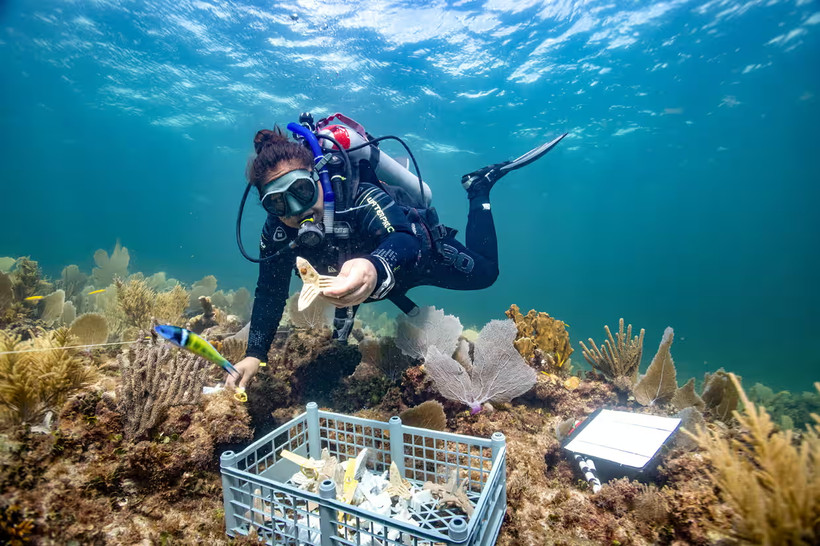 A member of the research team planting IVF-grown corals in the waters of Puerto Morelos, Mexico.(Photo: Secore International)
Previously, scientists experimented with growing coral species reproduced using in-vitro fertilization (IVF) at reef sites around Mexico, the United States, and the Caribbean. To create IVF corals, researchers collected coral eggs and fertilized them in the laboratory before transplanting them back into designated ocean areas.
After five years, survey results showed that following the record-breaking heatwave of 2023, 90% of IVF-grown corals remained healthy, while only 25% of natural corals survived the severe “ocean heatwave.” Many large coral colonies that had existed for centuries were bleached due to extreme temperatures.
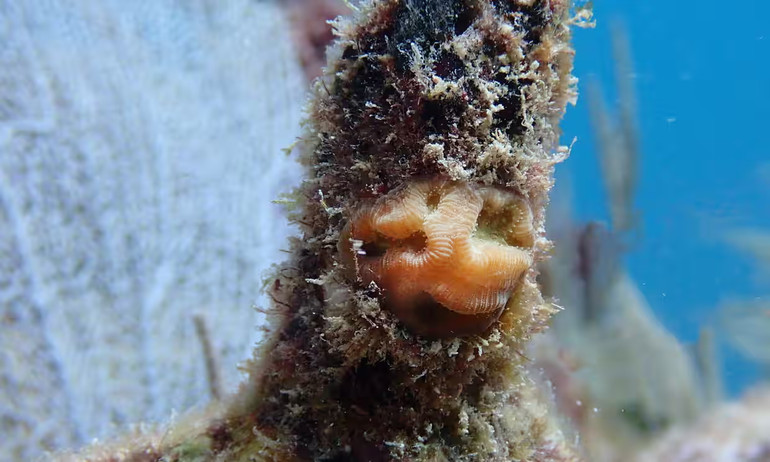 A young IVF-grown coral shows healthy development. Behind it, a natural coral colony has been bleached.(Photo: Raul Tecalco Renteria / SECORE International)
Dr. Margaret Miller, Research Director at the coral conservation organization Secore International, said that scientists were surprised by the strong resilience of IVF-grown corals. She believes artificial fertilization increases genetic diversity among young corals, giving them a better chance of adapting to rising temperatures.
However, scientists also warn that over time, the “heat tolerance” of IVF-grown corals may diminish. Therefore, while coral restoration is essential, humanity must take urgent action to address the root causes of climate change to ensure the long-term survival of coral reefs.