

Video 1
04/12/2025
The Caipeng solar energy–storage power plant in China is located at an altitude of 5,228 meters and is equipped with 170,000 solar panels along with a 20 MW / 80 MW energy-storage system.
China Huadian Corporation has begun phase two of the Caipeng solar-energy storage power plant in Shannan, Tibet, situated at an elevation of 5,228 meters — making it the highest solar power plant in the world. This surpasses phase one, which was built at 5,100 meters. The project demonstrates that renewable-energy facilities can be developed even in the most remote and extreme environments, according to Interesting Engineering.
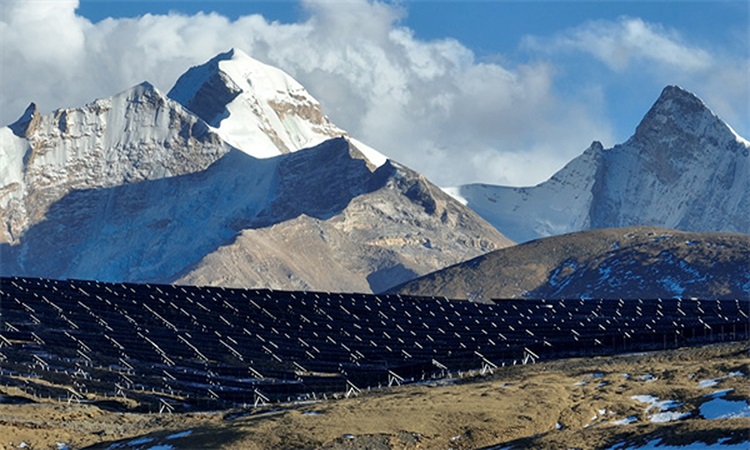 Phase one of the Caipeng solar-energy storage plant has been completed
Phase two of the Caipeng plant will cover 1.4 km² and add 100 MW of capacity, building on the initial 50 MW deployed in December 2023. Together, the two phases aim to address seasonal power shortages in central Tibet during winter and spring.
Construction of phase two began in August 2024. Using pre-installed mounting racks and on-site assembly lines, PowerChina — the project contractor — completed the project in just 115 days, which is 42 days ahead of schedule. These methods increased construction efficiency by 40% despite the harsh high-altitude conditions.
The project uses N-type bifacial TOPCon solar panels, which offer higher conversion efficiency and take advantage of the region’s strong snow reflectivity to boost electricity output. According to PowerChina, these panels are 7.5% more efficient than conventional modules. The premium bifacial panels capture sunlight reflected from the ground surface, significantly increasing total energy generation. As a result, overall efficiency is 20% higher than traditional monofacial solar panels, allowing greater power production and maximizing available sunlight potential.
The plant has a total capacity of 150 MW, consisting of 170,000 photovoltaic panels and a 20 MW / 80 MW energy-storage system. This setup is designed to provide 80,000 kWh of electricity for up to four hours after sunset, helping mitigate power shortages in central Tibet.
The 20 MW / 80 MW battery energy-storage system (BESS) supplied by Sungrow incorporates advanced battery-cell storage technology, enabling ultra-fast voltage response, frequency regulation, and grid-stability support. With liquid-cooling technology and AI-driven thermal management, the system enhances both safety and operational performance.
Bifacial solar-panel technology not only improves efficiency under normal conditions but also maximizes reflected light from snow and other reflective surfaces — particularly valuable in high-altitude environments like Tibet, where sunlight is more intense.