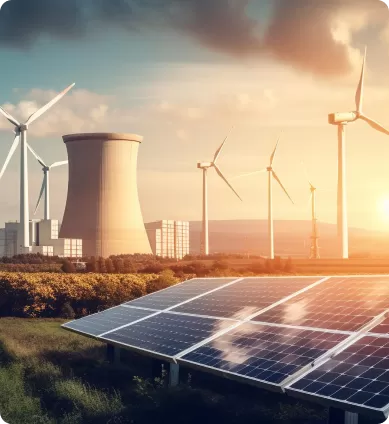


Video 1
04/12/2025
The global technological race in green hydrogen production has intensified as countries and corporations compete to secure market share and position themselves as leaders in the industry.
Hydrogen is viewed as a key solution to mitigating climate change. Burning hydrogen to generate energy is considered clean, as hydrogen is produced from water and its combustion results in water. Since the world cannot exist without energy and water, global interest in hydrogen continues to grow.
The Malaysian state of Sarawak is one notable example of harnessing hydropower resources to split water and produce green hydrogen. However, its economy still faces significant challenges, as fuel-cell technology — used to convert hydrogen into electricity — has been researched for decades, while efficient water electrolysis remains the greatest barrier.
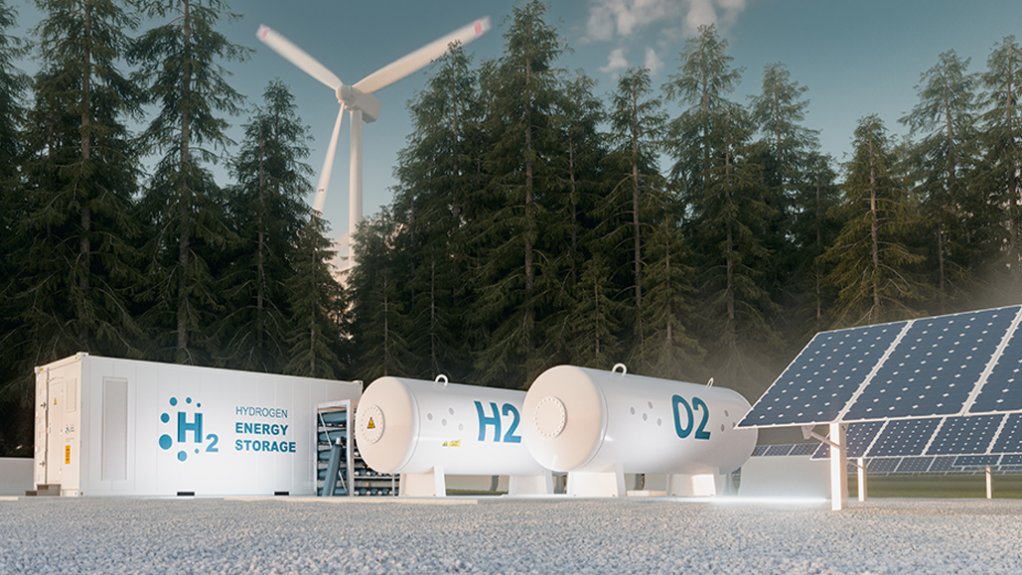 Green hydrogen is considered the “key” to ensuring a successful global energy transition
According to Professor Ahmad Ibrahim from the University of Malaya (Malaysia), the technology race in green hydrogen production has become increasingly fierce as nations and corporations strive to capture market share. Green hydrogen, produced by splitting water using renewable energy, is an essential solution for decarbonizing “hard-to-electrify” sectors such as heavy transportation, steelmaking, and chemicals manufacturing. Major drivers of this race include advancements in electrolysis technology, declining renewable energy costs, and strategic policy support.
Electrolyzers — used to split water into hydrogen and oxygen — are the backbone of the green hydrogen economy. Key technologies include solid oxide electrolyzers, proton exchange membrane (PEM) electrolyzers, and alkaline electrolyzers. Solid oxide electrolyzers offer high potential efficiency but require extremely high temperatures, while PEM electrolyzers are more compact and better suited to fluctuating renewable energy sources.
Companies worldwide are racing to reduce capital and operating costs for electrolyzers, a critical requirement for making green hydrogen competitive with traditional fossil-derived hydrogen. Gigawatt-scale electrolyzer projects are being developed globally to sharply reduce production costs. With the dramatic decline in solar and wind energy prices over the past decade, green hydrogen production has become increasingly viable. Renewable energy now accounts for the majority of production costs, and large-scale projects are emerging in regions with abundant solar and wind resources such as Australia, the Middle East, and Chile.
New initiatives combining various renewable sources, energy-storage solutions, and different electrolyzer technologies are being explored to maximize efficiency and enable continuous hydrogen production — even during periods of inconsistent renewable output.
The European Union (EU) is leading with major investments and policy frameworks supporting green hydrogen as part of the European Green Deal. The EU aims to build a hydrogen value chain capable of producing 10 million tonnes of green hydrogen domestically and importing an additional 10 million tonnes by 2030.
Meanwhile, Japan, China, and South Korea are investing heavily in hydrogen infrastructure and technology. Japan, a pioneer in hydrogen innovation, is working to scale up renewable-based hydrogen production and establish a full-fledged hydrogen economy. China is rapidly expanding both domestic and potential export-oriented hydrogen projects with ambitious targets.
The United States has also announced significant funding for hydrogen hubs nationwide, attracting major energy companies and tech firms racing to secure a foothold in the U.S. hydrogen market. Corporations such as Siemens and Toyota are investing in green hydrogen projects and forming technological partnerships. Siemens focuses on large-scale electrolyzer development, while Toyota leads fuel-cell innovation for hydrogen-powered vehicles. Startups are joining the race as well, focusing on advanced technologies for hydrogen production, transportation, and storage.
However, Professor Ahmad Ibrahim notes that hydrogen transportation poses major challenges due to its low energy density and the need for high-pressure or cryogenic storage. Improvements in hydrogen pipelines, storage systems, and fuel-cell technologies will be crucial to building a viable hydrogen economy. Meanwhile, green hydrogen remains more expensive than gray hydrogen produced from natural gas. To compete, green hydrogen production costs must fall to USD 1–2 per kilogram, depending on technological advances and sustained investment.
Professor Ahmad Ibrahim concludes that the race to dominate green hydrogen technology is both competitive and collaborative. Governments, research institutions, and private companies are driving innovations that could transform global industries and energy systems.
As technological breakthroughs help reduce costs and scale production, green hydrogen could play a vital role in achieving global net-zero emissions targets. For Malaysia, this means establishing a strong nationwide research and development alliance for green hydrogen — rather than relying solely on Sarawak.