

Video 1
04/12/2025
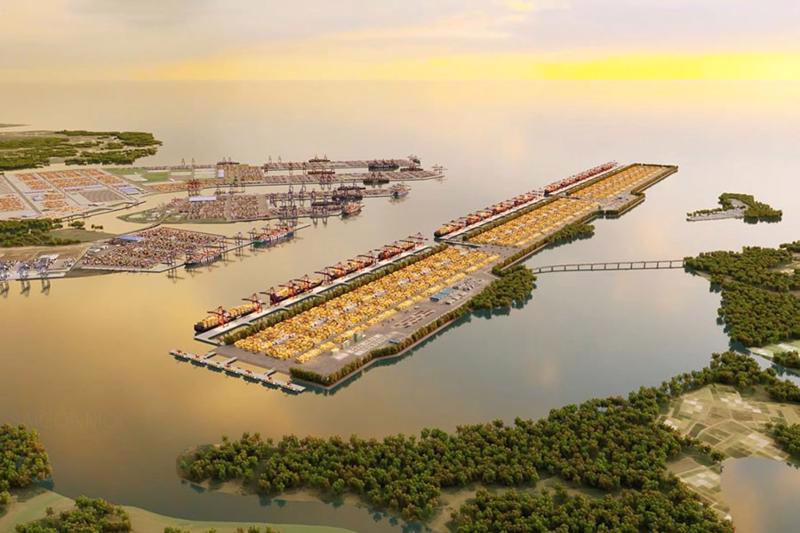
The Government Office has just issued Notice No. 418/TB-VPCP announcing the conclusion of Deputy Prime Minister Tran Hong Ha at the meeting on the investment policy dossier for the Can Gio international transit port project (HCMC).
In this announcement, Deputy Prime Minister Tran Hong Ha noted that the investment in the construction of an international transit gateway port in Can Gio (hereinafter referred to as Can Gio port) will only be implemented when meeting the requirements of national and ethnic interests. At the same time, the construction of the port must ensure the selection of investors with full capacity and experience in investing in the construction, exploitation and development of international transit ports so that they are competitive in the region and internationally, and develop sustainably.
Deputy Prime Minister Tran Hong Ha requested the Ministry of Transport, the Ho Chi Minh City People’s Committee and other ministries and branches to coordinate with the Ministry of Planning and Investment in the process of appraising project dossiers according to the provisions of the Investment Law and related guiding decrees to ensure strictness, completeness and compliance with the Prime Minister’s authority.
The Ministry of Planning and Investment and the Ho Chi Minh City People’s Committee are responsible for guiding and supporting investors to propose research projects to fully absorb written opinions and opinions expressed at meetings of ministries and agencies to supplement and complete the proposal dossier according to legal regulations, send it to the Ministry of Planning and Investment to complete the appraisal, and submit it to the Prime Minister for consideration and decision in September 2024.
The Ministry of Planning and Investment is responsible for appraising and specifying the conditions, objectives and requirements for port investment and exploitation, especially for the period up to 2030. The draft decision on investment policy submitted to the Prime Minister for approval must comply with legal regulations, ensuring the selection of investors with full capacity and experience in investing in construction, exploitation and development of ports that are competitive enough in the region and the world.
In addition, the investment in port development must ensure reasonable divergence for each stage, in accordance with the seaport planning and demand according to the forecast results of goods passing through the port. The dossier must fully demonstrate the orientation of the main functional areas of the port. If necessary, a foreign consulting unit with capacity and experience can be invited to participate in the consultation.
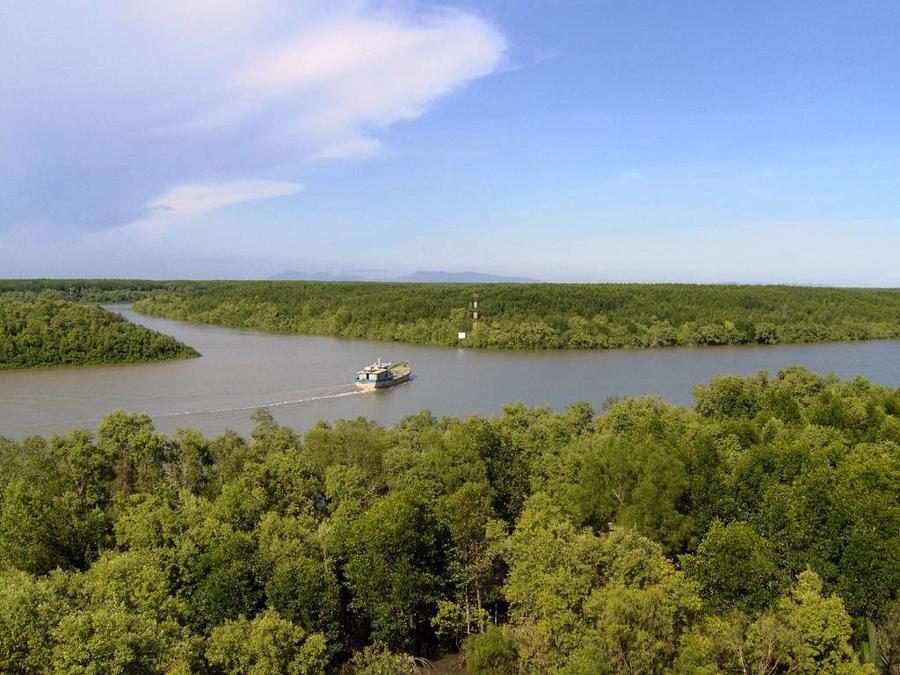
Notably, Notice No. 418/TB-VPCP noted that the consideration of the decision on project investment policy must resolutely not “sacrifice” the environment, clearly indicating the area and area where forest use purposes need to be changed, and what the impact will be.
“Because the project is related to Vietnam’s first World Biosphere Reserve, which is of great value and significance to Ho Chi Minh City and the region, it is necessary to thoroughly and comprehensively assess the environmental impacts. The Ministry of Natural Resources and Environment, the Ministry of Agriculture and Rural Development and the Ministry of Foreign Affairs must fully and specifically state and have a clear opinion regarding the environmental impacts of the project…”, the announcement clearly stated the request of Deputy Prime Minister Tran Hong Ha.
Regarding technology, the port exploitation technology plan must be oriented towards modernity, environmental friendliness, in line with the world’s development trends, and at the same time be determined according to the overall design and specified for each stage to ensure investors exploit it most effectively.
Regarding the appraisal report and draft decision on investment policy, the Deputy Prime Minister requested to clearly define the content of the requirements for Ho Chi Minh City and investors to invest in infrastructure to ensure the criteria of “Green Port” for the period up to 2030, 2035 and 2050 (plan, roadmap for providing environmentally friendly fuel, investing in infrastructure, requirements of the labor force…).
Regarding the interaction between ports, Notice No. 418/TB-VPCP requires to properly resolve the relationship between Can Gio and Cai Mep wharf area of Ba Ria – Vung Tau seaport and the interaction between invested projects; as well as the use and exploitation of maritime routes and shared infrastructure.
Regarding the selection of investors, Ho Chi Minh City, based on Resolution 98/2023/QH15 of the National Assembly on piloting a number of specific policy mechanisms for the development of Ho Chi Minh City, will study and consider adding a number of other important criteria to select strategic investors.
The city can consider contents such as attracting shipping lines with large fleets in the world; requirements on investment scale, construction investment capital within 5 years (must complete investment in 4 ports with total capital of about 1.5 billion USD); cooperate with domestic enterprises to invest and exploit ports; fulfill the commitment to attract the volume of international goods transiting through the port.
Previously, at two meetings in June and August 2024 organized by the Ministry of Transport, all members of the appraisal council agreed on the need to establish a project and voted to approve the project. At the end of August, the Ministry of Transport submitted to the Prime Minister the results of the appraisal of the research project to build Can Gio port. This is an important step for the competent authority to consider and approve the policy of building the largest transit seaport project in Vietnam in Ho Chi Minh City.
Can Gio international port project has a total route length of 7.2 km with a scale of 6.8 km of mother ship wharf, 1.9 km of barge wharf. The total demand for port land use is about 571 hectares; of which the island land area (coastal protection forest) is 93.37 hectares, the water surface area is 477.63 hectares. The port can accommodate ships with a tonnage of up to 250,000 DWT, equivalent to 24,000 TEUs). The distance from the wharf to the channel border is from 340 m – 393 m. The maximum capacity of Can Gio port is 16.9 million TEUs, the total expected investment is nearly 6 billion USD. The whole project is divided into 7 investment phases, expected to be completed in 2045.
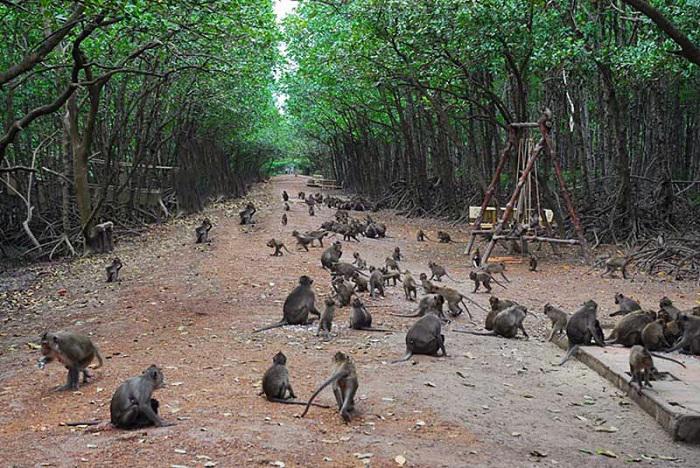
Regarding the environmental impact of the project, the Ho Chi Minh City People’s Committee had previously made a preliminary assessment and said that the proposed port construction area is located in the buffer zone of the Can Gio Mangrove Biosphere Reserve, and does not directly affect the core zone of the reserve. However, experts have noted and warned that the investment in Can Gio port is expected to impact the water, air, and noise environments; generate waste, impact the mangrove ecosystem, aquatic resources, etc.
Mr. Khue