

Video 1
04/12/2025
A new report from the energy research organization Ember warns that countries must take much faster action if the world is to achieve the goal of tripling global renewable energy capacity by 2030.
The report shows that one year after the global pledge to triple renewable energy capacity was announced at COP28, national government targets have barely changed — only enough to reach just over double the current global renewable capacity by 2030. During this time, the outlook for solar energy has improved, leading to upgraded market projections for global renewable energy capacity by 2030.
At COP28, more than 130 countries committed to tripling global renewable energy capacity and doubling the annual rate of energy-efficiency improvements by 2030. However, by October 2024, only eight countries had updated their renewable energy targets, adding just 4 GW to projected global capacity.
Current national renewable energy targets for 2030 total 7,242 GW, a 2.1-fold increase from the 3,379 GW recorded in 2022. To meet the global goal of tripling renewable capacity, the world must install an additional 3,758 GW by 2030.
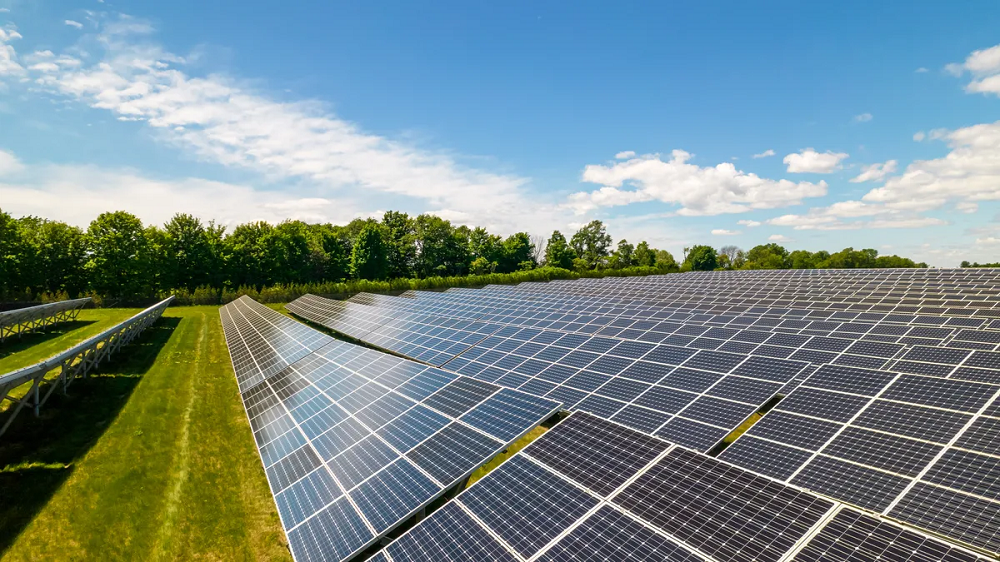 Countries must act much faster to achieve the goal of tripling renewable energy capacity by 2030
Governments have yet to keep pace with the rapid rise of solar power, even though its impressive growth has led major agencies to revise their forecasts. Over the past year, the International Energy Agency (IEA) has revised its 2030 outlook upward by 22%, projecting that solar power capacity in 2030 will exceed the fivefold increase required to meet the global tripling target. By comparison, Ember’s analysis shows that national solar targets for 2030 total 3,011 GW, representing only a 2.5-fold increase over 2022 levels.
For wind energy, national targets are enough to double global capacity by 2030. Forecasts show that global wind capacity will reach around 2,100 GW by 2030, matching national targets but still falling short of the tripling required to meet global goals.
Dr. Katye Altieri, Electricity Analyst at Ember, noted:
“The renewable energy market has moved forward — but government ambition has not. Renewable growth continues to outpace expectations every year, accompanied by falling costs. The market is booming, but national ambition remains lacking.”
The report analyzed 2030 renewable energy capacity targets for 96 countries and the EU as a bloc, representing 96% of global renewable capacity, 95% of electricity-sector demand, and 94% of global power-sector emissions. Among these, 83 countries have explicit renewable capacity targets for 2030.
Ember’s analysis shows major gaps between current regional targets and what is needed to achieve the global tripling goal across regions such as the Middle East and North Africa (MENA), Sub-Saharan Africa, Eurasia, Latin America, and Asia.
While countries committed at COP28 to tripling global renewable capacity, the COP29 presidency has proposed an additional global target: a sixfold increase in energy-storage capacity from 2022 levels, aiming for 1,500 GW by 2030 — a vision supported by the G7 earlier this year.
The report shows that only 30 of the 96 countries assessed have any form of national storage target. Their combined 2030 storage targets total 284 GW, which is 1,216 GW below the global storage goal of 1,500 GW and 492 GW below BloombergNEF’s market forecast for 2030.
To reach the goal of tripling global renewable energy capacity, urgent action is required. Market momentum, falling costs, and rising technological efficiency in renewable energy should give governments the confidence to raise their ambition and update their national targets. COP29 and the 2025 update of Nationally Determined Contributions (NDCs) present ideal opportunities to close the gap between current national commitments and what is required to meet — or exceed — the global tripling target.